
The Montessori philosophy and pedagogy has been around for more than 100 years and at its core is the premise of "Follow the child". Whilst this principle is widely recognised, quoted, adhered to – it is only part of what Maria Montessori said when she spoke to students on January 6th , 1942. Her exact words were "………… follow the child as his leader".
Somehow over time "we" the educators have correctly focused on "follow the child" but have sometimes forgotten the later part "as their leader". Sometimes the nuances like the one above have gotten lost in communication with wider stakeholders and this has led to some of the myths and misconceptions that have emerged about the Montessori approach.
When considering the term leadership – not unlike the understanding of the Montessori approach – there many misconceptions. Often confused with the term Management, the term Leadership is misunderstood. During a recent panel discussion hosted by Montessori Global Education, we asked the attendees the following questions to determine their individual understanding of the term "leadership" at the start of the event:
- If I asked you to think of a Leader; Who would come to mind?
- Was your name on that list of names?
- Did a picture of a child that your engage with pop into your mind?
These were our findings…
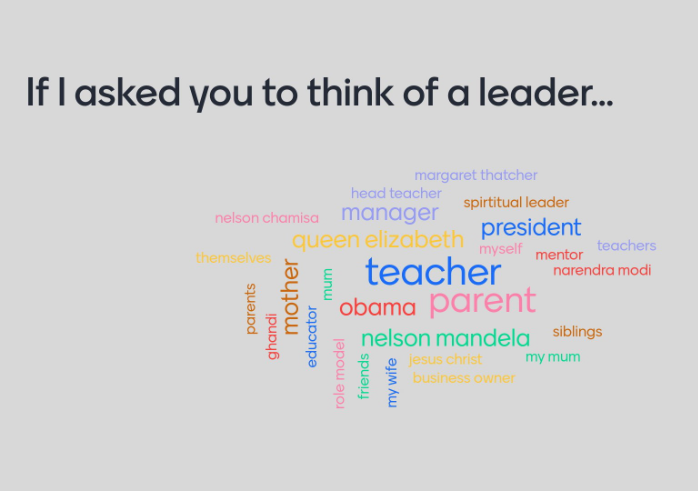
The results as you will see were a mixed bag of responses and not altogether surprising or unexpected. Leadership is all around us and happens in all aspects of our lives:
- Professional
- Social and
- Family
The responses clearly indicated this understanding. What was interesting to note was that only eight responders considered "themselves".
At some point, to a greater or lesser extent most people have been leaders in different aspects of their lives SO why when we are asked to think about a leader, we do not picture or consider ourselves.
- Could this be because it is challenging to understand the distinction between Leadership and Management/ Leader and Manager? These two terms are often used interchangeably BUT do they mean the same thing?
- Could it be that there a fixed idea of the role/individual? For example a leader is someone who has all the answers or a leader is someone who has a specific title.
To explore this thinking further we asked our panelists what was their definition of leadership.
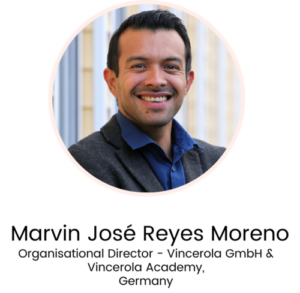
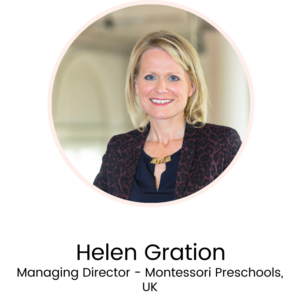

A Leader is someone who:
- Guides a person or group
- Facilitates an environment that allows everyone to succeed
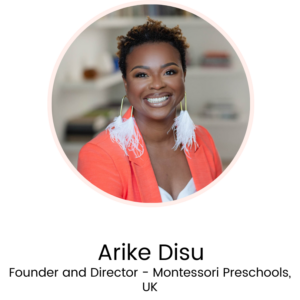
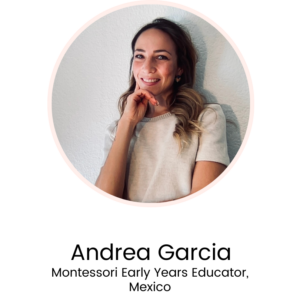
Through our discussion we landed on the following. Leadership is about:
- focusing on philosophy, vision and policy rather than the practical day to day operations
- being able to inspire others; giving the individual a sense of direction alongside ownership and autonomy which allows for growth and development
- having a clear vision
- thinking creatively
- being reflective
- being confident but reflective and able to critique
- creating a "can do" culture where learning from mistakes is acceptable
- having a problem-solving approach to challenges and/or barriers and "thinking outside the box"
When Maria Montessori, talked of"………… follow the child as his leader", what did she mean?. In a Montessori environment the educator is the guide, so how can this guide also be the leader. Does this mean that the educator must determine the child's learning path and if this is the case then does this not contradict the principle of "Follow the child"?
For me, the term, "follow the child" is about honouring the child's intrinsic desire to learn through the facilitation of a prepared environment that has been seeded for the children with activities and resources based on the observations of children's developing needs, interests and stages of development. Through the preparation of this environment the educator is "leading" and supporting the child's individual learning and development. So, if the adults supporting children's learning and development are leading children learning and development through observation and then seeding the prepared environment – THEY ARE VERY MUCH THE LEADERS.
As the leaders in the environment, they are also the role models. What we therefore need to consider is – How can these role models then implement and promote the principles of Montessori leadership in their organisations?
Respect & Trust
Are the cornerstones of the Montessori Philosophy. For individuals in any organisation to develop and demonstrate leadership skills, confidence, and self-esteem in their abilities they must experience the organisational culture of trust and respect in their environments. The culture of trust and respect then empowers the individual; they will then in turn value the organisation, individually become empowered; their confidence and self esteem will grow as they will feel valued for their expertise. This confidence, self-esteem, empowerment etc will then cascade down to other stakeholders as these individuals will be the role models for these values/skills/experiences.
Freedoms within boundaries
"We must clearly understand that when we give the child freedom and independence, we are giving freedom to a worker already braced for action, who cannot live without working and being active." The Absorbent Mind, pg. 91.
Alongside trust and respect, freedom is another prerequisite that facilitates good leadership qualities. Not unlike the freedoms afforded to children in a Montessori environment; freedom to allow the growth of leadership is equally vital.
This freedom however can be quite challenging for those individuals who have never been afforded this opportunity. During our discussion Helen Gration mentioned the words "seeing the essence" which really resonated with me. It is true that everyone has an essence or as I would say it – something to offer. This could be a skill, knowledge, talent, ability etc but in order for this essence to come forward we not only have to recognise it but also allow it come to fruition. This is not always possible however because –
- sometimes there is no freedom or opportunity to do this and
- sometimes it is our conditioning – narratives imposed on us, experiences, or even blatant indoctrination that we have been exposed to that hold us back
If we want to ensure that we break this vicious cycle, then the educators who are supporting the learners of today must take an active step in ensuring that they are imbibing and role modelling the qualities of being a leader – this can only happen if these educators have the freedom albeit within boundaries (the vision/ethos of their organisations) to be able to do this.
The prepared environment
The prepared environment is a combination of the physical environment and the cultural environment. For leadership to flourish however the cultural environment takes precedence. The most important aspect of this prepared environment is trust and how the culture of trust is cultivated in the environment.
Trust can be fostered when:
- the leader is a facilitator
- honest and supportive communication is encouraged, where reflective practice informs next steps
- there is direction alongside ownership and autonomy which supports growth and development
- learning from mistakes is acceptable which in turn develops personal accountability which is supported by collective responsibility
Life-long learning
Developing the skills, qualities and knowledge for leadership requires a commitment to life-long learning. Individuals who commit to life-long learning, approach the world with curiosity and commitment to ongoing growth develop resilience, a "can do" attitude and creativity skills which lend to seeing and doing things differently, using imaginative and innovative ideas and develop a "thinking outside the box" approach.
Every individual learns differently and learning can take place in different ways – be it through reading, attending conferences, listening to podcasts or webinars, training for Continuous Professional Development (CPD) or practical experiences. Creating a culture for learning and development for everyone however is key for promoting leadership skills and qualities.
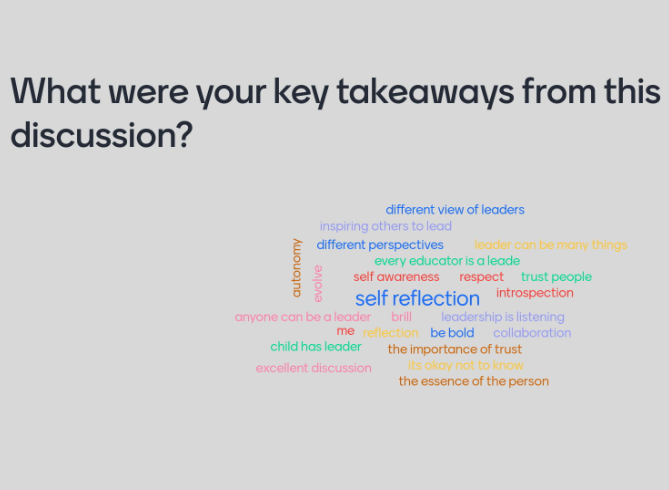
At the end of our webinar when we asked the questions "If I asked you to think of a leader….." and "What were your key takeaways….."
We had the following responses …

Please note: the recipient will need to be a Network member and logged in to view any socially shared content.