
Maria Montessori was born on 31st August in Italy in 1870. Today, we are sharing her story and celebrating her philosophy and activism, which is still as relevant today as it was 100 years ago.
Throughout her life, Dr Montessori challenged the status quo. She broke gender barriers from an early age, by first enrolling in an all-boys technical school and soon after beginning medical school at the University of Rome. She stood up against war and fascism, as well as for women’s rights, children’s rights, and for those most vulnerable in society, such as children born into poverty or with disabilities. Here’s a bit more information about Montessori’s activism.
Montessori and feminism
“The woman of the future will have equal rights as well as equal duties. Family life as we know it may change, but it is absurd to think the feminism will destroy maternal feelings. The new woman will marry and have children out of choice, not because matrimony and maternity are imposed on her”.
– Montessori amplified her vision of the “New Woman” during a series of lectures around Italy in 1899. Kramer, Rita. 1988. Maria Montessori: A Biography. Boston: Da Capo Press. Pg 81
Montessori was a firm believer in equality amongst the sexes. She was the first woman in Italy to receive a medical degree and gained international acclaim as an advocate for women’s rights. She addressed her peers at the International Women’s Congress numerous times championing women’s education and the reduction of illiteracy.
At the Berlin Congress in 1896 for example, she spoke “for the six million Italian women who work in factories and on farms as long as eighteen hours a day for pay that is often half of what men earn for the same work and sometimes even less.”
Montessori’s beliefs about the rights of women were well ahead of her time, and some of her hopes for the future are still being fought for across the globe today.
Montessori and inclusivity
“Our efforts will have to go into gaining an understanding of those children who have the most difficulty adapting to society and helping them before they get into trouble”.
– National Pedagogical Congress in 1898 Kramer, Rita. 1988. Maria Montessori: A Biography. Boston: Da Capo Press.
After graduating as a physician, Dr Montessori worked at the University of Rome psychiatric clinic, where she developed an interest in the treatment of special needs children. She observed them closely and, for several years, she worked, wrote, and spoke on their behalf, challenging existing perceptions of children.
Montessori and the rights of the child
“We must see the child from the point of the future man. We must understand that it is a human right that the child should grow in the right way because the man will grow from the child in a few years. This man must have the rights of every citizen” –
Maria Montessori, The 1946 London Lectures, p. 140
Following her study of children, Maria Montessori came to believe that the first years of life are the most important in psychic development. She thought the existing education system was oppressing children, and that all children had an innate desire to learn, which was being squashed by the education system and society.
She set up her own school for children in January 1907, called the Casa dei Bambini, where the curriculum was rooted in her child-led methodology. The school was hugely successful and new ones that mirrored her method popped up across Italy in the following decades, with hundreds of thousands still using her method throughout the world today.
Montessori and peace
“Establishing lasting peace is the work of education; all politics can do is keep us out of war.”
– Maria Montessori, Education and Peace, p. 24
Maria Montessori believed education was the key to creating lasting peace. She was known as a pacifist and was forced into exile from Italy during Mussolini’s premiership due to her anti fascist views.
From here, she went to India where she developed her work Education for Peace, and developed many ideas still taught today. In her last years, Montessori was nominated for the Nobel Peace Prize three times, in 1949, 1951, and 1952. Much of her teaching can be found in the UN’s Sustainable Development Goals.
Montessori and the environment
“We shall walk together on this path of life, for all things are part of the universe and are connected with each other to form one whole unity.”
– Maria Montessori, To Educate the Human Potential, p. 5
While science hadn’t yet discovered the devastation of global warming, Montessori was a firm believer in being at one with the universe. She travelled widely across Europe, America and India, and by 1939, she spoke of mankind being one entity, comparing it to a single organism, or one nation. She began to use the term ‘citizen of the world’ and saw her method not just as one of education but as a tool to educate humanity about living well within the limits of our planet.
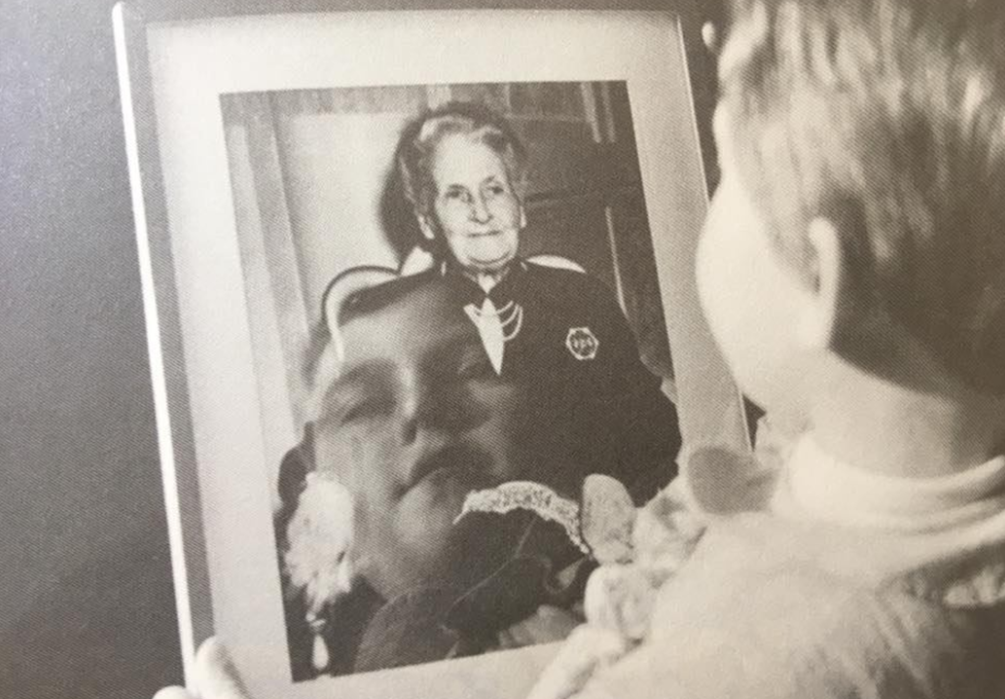
Lead image courtesy of Montistory, Dr Montessori at the 1913 Rome Lectures.
Please note: the recipient will need to be a Network member and logged in to view any socially shared content.